Egypt Launches New Programmes to Turn University Research Into Startups
Egypt's push to turn university research into startups has moved from announcement into implementation. The Faculty for Factory programme places researchers inside factories for four to six months, and with proposals closed in June, the first round is running on a timeline that ends late in the year.

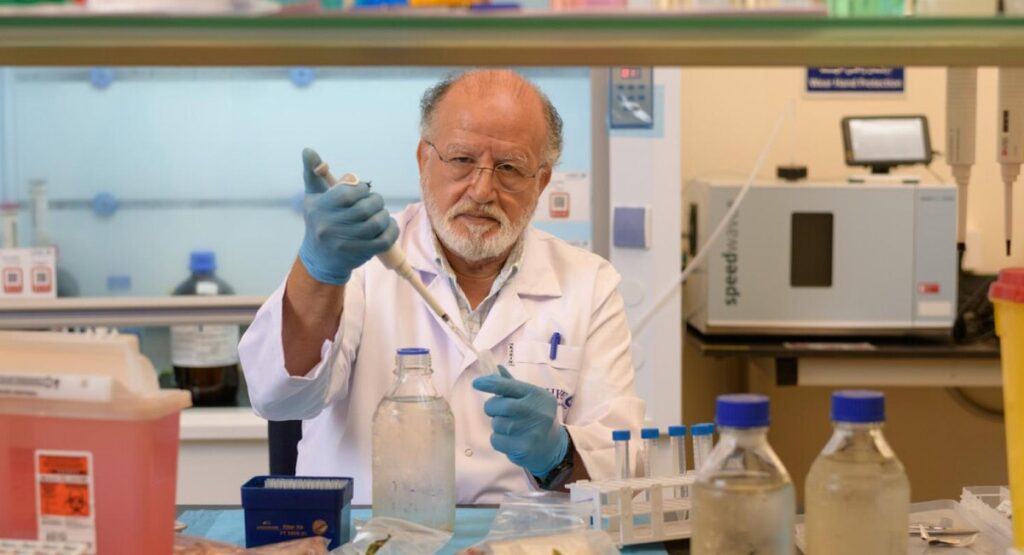
Egypt’s attempt to turn university research into products and startups has moved from announcement into implementation. The centrepiece, the Faculty for Factory programme, opened applications in May 2026, closed proposals on June 30, and places researchers inside factories for four to six months.
Placements run on that four to six month cycle, which puts the first round on a timeline running into the end of the year. No placement counts or outcomes have been published yet, so the programme is at the stage where the mechanism is running but the results are still to be shown.
How the placement works
Each placement follows the same sequence. The researcher first integrates into the factory environment, then assesses its challenges, and then develops practical solutions or prototype models suitable for industrial application.
The principal researcher must be a faculty member at a public university or a government research centre or institute, hold a PhD in a relevant field, and stay fully dedicated to the factory for the project. Early-career researchers get preference, with the aim of building researchers who combine academic depth with practical industrial experience.
Host factories must be established Egyptian industrial companies operating in Egypt, able to give researchers access to production processes, data, facilities and technical teams. Participants keep their full university pay during the placement, with an additional incentive paid by the ministry, and placements repeat on a six-month cycle.
The programme covers all state institutions and academic disciplines, not only engineering and applied fields. Ain Shams University vice president Amany Osama noted the programme spans disciplines beyond engineering and applied fields.
The wider package around it
Faculty for Factory sits inside a wider package from the Ministry of Higher Education and Scientific Research, built to shift Egypt towards a knowledge-based economy under Egypt Vision 2030. A national challenge bank collects industrial problems for researchers to solve, while networks of central laboratories, technology transfer and commercialisation units, business accelerators and science and technology areas expand across the country.
The ministry has also opened a new track for academic promotion based on knowledge economy and innovation work, sitting alongside the purely academic track. Industry-related research receives funding, and alliances built around technology, manufacturing and commercial readiness levels tie research more closely to market needs.
The ministry has mapped a commercialisation pathway that starts with an idea or patent, moves through readiness assessment, prototype development and industrial testing, and ends in licensing, the creation of a startup, or adoption by industry. Priority research programmes target artificial intelligence, advanced manufacturing, health, food security, water and climate change.
A network of living labs across the governorates tests solutions in real-world settings, and three technology valleys plus testing zones for medical, food, materials and energy manufacturing are part of the wider build-out.
The research base is large, with around 46,000 internationally published papers, 53.5 per cent of them in Q1 journals, and more than 140,000 researchers registered in Scopus. Egypt ranks 25th globally in international scientific publishing, and 1,106 of its scientists appear on the 2025 Stanford–Elsevier list of the world’s top two per cent of researchers.
Egypt also ranks 86th in the Global Innovation Index, a position the package is designed to improve by turning more of that output into products and companies.
What will decide whether it works
The design attacks the two usual break points. Promotion rules rewarded publication alone, so researchers had little reason to spend months inside a factory, and companies had no simple way to find the right academic team for a production problem.
A challenge bank, a promotion track that values industrial impact, and researchers embedded in factories all push on those points at once. The risk sits on the factory side, since the model only works if enough established manufacturers open their production lines and data to outsiders and then pay to adopt what works.
The next evidence to look for is concrete. How many researchers were placed, which factories took part, and how many placements ended in a licence, a startup or an adopted solution will show whether the first round converted factory time into economic output.

Leave a Reply