He Started by Killing the Checkout Queue. Now Samuel Ayo Oyedemi’s SKAAP Tells 36,000 People What Is Really in Their Food
Samuel Ayo Oyedemi started SKAAP to end the checkout queue. Its AI food intelligence experience has since passed 36,000 users and 118,000 scans.

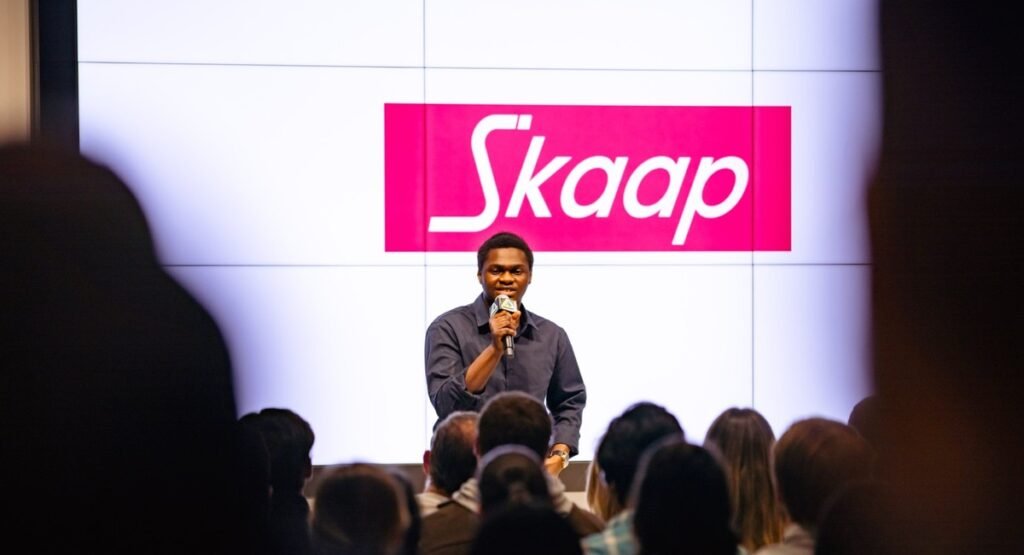
Every grocery trip is a hundred small decisions. Most of them get made in seconds, in front of a shelf, with a label nobody has time to decode.
We cover founders who start from a problem they have lived themselves, and Samuel Ayo Oyedemi is one of them. His platform SKAAP turns a phone camera into a food guide, and by October 2026 more than 36,000 people had used it to make sense of what they buy and eat.
The numbers behind it are striking for a product that launched in its current form in March 2026. SKAAP has recorded over 118,000 scans, and its users span more than 40 metro areas.
Meet SKAAP
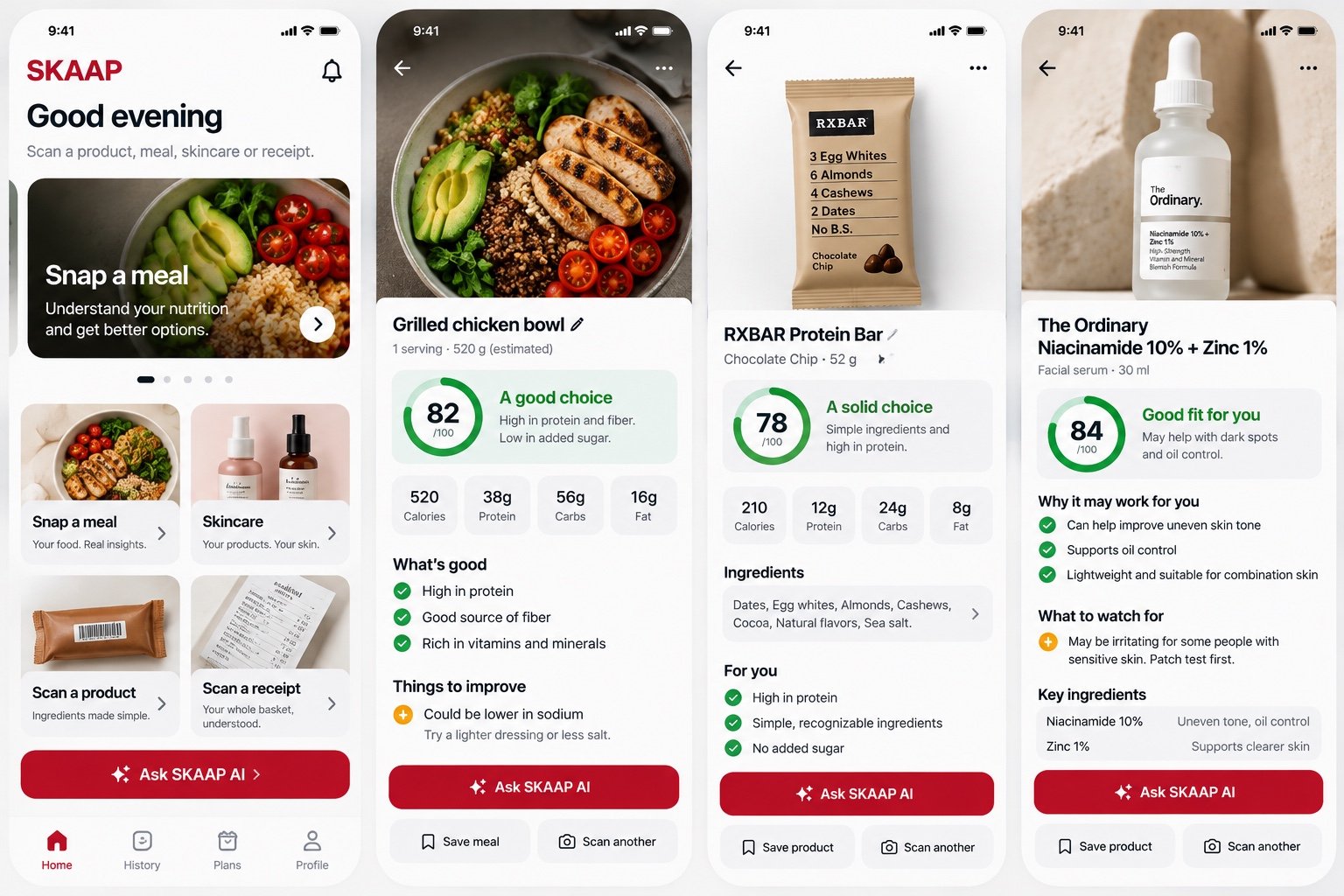
SKAAP is an AI-powered platform that helps people understand and improve what they consume, from the groceries they buy to the meals they eat. Users scan packaged products, photograph meals and scan shopping receipts to explore food information and their own consumption patterns.
Every scan returns a SKAAP Score from 0 to 100. Nutrition, measured by Nutri-Score, counts for 60 percent, additives for 30 percent and organic and processing factors for 10 percent, so the same product gets the same score anywhere.
SKAAP works on any barcode, anywhere in the world. Whether the shopper is in Lagos, London, New York or Tokyo, the camera reads the barcode and pulls the ingredients.
The AI then translates the detail into plain explanations and possible next steps, including simple swaps that fit the user. Users can also ask SKAAP AI questions about food and ingredients, and the app tracks consumption history to surface patterns over time.
It also works beyond food, with skincare scans that break down ingredients in the same plain language. Scanning, scores and ingredient breakdowns are free, while SKAAP Plus is pay-what-you-want from $2.99 a month and adds weekly habit reports, custom alerts and product search.
SKAAP is clear about its limits. It is not a substitute for medical or individualised professional nutrition advice, a point Oyedemi makes himself.
The man behind it
Oyedemi was born in Lagos and moved to Canada in 2023. His background spans technology, product development, business operations and entrepreneurship, and he co-founded SKAAP with Satyam Hitendra Singh.
Before SKAAP he worked in retail at Lululemon. A holiday rush there left shoppers waiting up to 30 minutes to pay, while one customer he served on a mobile terminal finished in ten.
That gap became the company. He summed up the original idea in three words, scan, skip and escape.
We believed consumers should be able to walk into a store, scan what they wanted, pay, and leave without standing in a checkout line.
Samuel Ayo Oyedemi, Co-founder of SKAAP
From checkout queues to food intelligence
The checkout idea was tested first. Early trials ran in about 10 stores across Calgary, Edmonton and Saskatchewan, with roughly 200 users.
Transaction volumes stayed low, and the team learned that getting retailers comfortable with scan-and-leave shopping would take time. So the question behind the company began to change, from how people could shop faster to how they could understand what they were buying.
SKAAP Technologies grew out of the founders’ startup work in 2024 and 2025. The current AI-powered food intelligence experience launched as a progressive web app on March 15, 2026, so users reach it from the browser and pin it to the home screen instead of downloading an app.
The shift found its audience fast. The food intelligence feature drew 2,000 users in under five weeks, according to the company.
Grocery shopping is full of small decisions that add up. People compare products, read labels, and try to make choices aligned with their goals, but the information is often difficult to interpret in the moment.
We started SKAAP to make everyday food decisions easier to understand and improve.
Samuel Ayo Oyedemi, Co-founder of SKAAP
The numbers so far
In its October 2026 reporting, SKAAP had passed 36,000 users and 118,000 product scans. Oyedemi offered supporting analytics for editorial verification and welcomed independent scrutiny of the figures.
The company says its users span more than 40 metro areas. It is exploring additional international markets, but it has not announced formal launches in those countries.
The team has taken part in startup ecosystems including Cultivator by Conexus, DMZ, Microsoft for Startups and Nasdaq Milestone Makers. It has also won startup competitions in Canada.
That backing matters for a two-person founding team building across borders. Its company profile lists Boston, Massachusetts as its headquarters, with roots in Lagos and Canada.
The second scan is the real test
SKAAP’s growth so far shows the first scan is easy to win. The harder test is whether the information is useful and trustworthy enough to bring people back, and Oyedemi names that as the company’s central challenge.
A major challenge is making product information sufficiently useful and trustworthy that people return after their first scan.
Samuel Ayo Oyedemi, Co-founder of SKAAP
Over the next 12 months the team plans to improve product data coverage, repeat-use features, personalised insights and distribution. It is also exploring retailer partnerships and future scan-and-go opportunities, though those retail concepts remain exploratory.
That last point closes a circle. The checkout idea SKAAP started with may yet return, this time as a feature inside a product people already use to understand their food.
His longer ambition is for SKAAP’s intelligence to power consumer experiences and smarter physical retail across multiple continents. For now the measure that matters is simpler.
It is whether the next scan follows the first.




Leave a Reply