Tyler Claxton Turned a Van on His Driveway Into a Mobile Barbering Business
Tyler Claxton started barbering without qualifications and built his first mobile barbershop with his father on a driveway. Now he teaches barbers around the world to go mobile, and builds ready-made mobile barbershops in the family workshop.

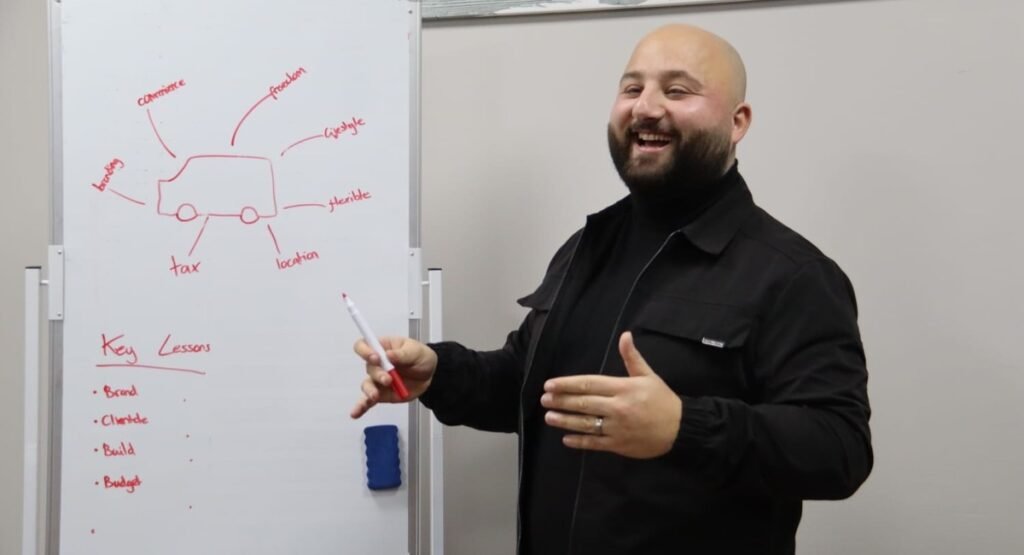
Tyler Claxton cuts hair in a van. Four days a week, the van is his barbershop, his office and the business he owns outright.
He started barbering around ten years ago without qualifications and learned the trade by volunteering in a small Italian barbershop. He built his first mobile barbershop with his father on his own driveway.
Today he also teaches barbers around the world to do the same, through The Mobile Barbering Hub. He builds ready-made mobile barbershops with his father in the family workshop, Signature Mobile Conversions.
His videos of the van have been watched millions of times, and barbers from around the world now ask him how to build a business on wheels.
Starting without qualifications
Before barbering, Claxton worked as a one-to-one care worker for a family member. It was a demanding and stressful role, and he was later diagnosed with shingles and spent around six months off work, resting at home and taking medication.
The time away made him think seriously about what he wanted his future to look like. He had always been creative, enjoyed making things, editing videos and graphic design, and wanted to build something for himself and become a business owner.
A friend who knew him well suggested barbering. Claxton immediately said he did not think he could cut hair, but his friend pointed out that he liked working with people and was good with his hands.
He started by cutting friends’ hair and made plenty of mistakes, because he had no formal qualifications and did not yet know what training routes or barbering colleges were available. When he felt ready to look for an opportunity, he contacted local barbershops, and most turned him down.
Eventually, a small Italian barbershop gave him a voluntary position. The owner recognised his family and knew his Italian grandfather, who had taken the owner and Claxton’s uncle to school.
Claxton spent around eight months volunteering, sweeping floors and learning from the ground up. During that period he also became a father, and having his first daughter gave him a powerful reason to keep learning and build a career he could provide for his family with.
He developed his craft, started building a social media presence and moved on to work in high-end barbershops. He has now been barbering for around ten years.
The van on the driveway
Over time, Claxton built a strong clientele and a following of around 5,000 on Instagram. He was working in a high-end shop, taking on management responsibilities and becoming one of the first people in and the last to leave.
He was booked around a week or a week and a half ahead, had sponsorship and brand relationships, and attended events such as Barber Connect and Salon International. He was earning good money, but with a wife and two daughters to provide for, he increasingly wanted more freedom and a business of his own.
He first looked at renting a barbershop. He had found a premises he was interested in and drove past one evening to show his brother, only to find the windows covered and a coming soon sign in place.
Someone else had taken it. The disappointment made him question whether opening a traditional shop was actually the right direction for him.
Mobile barbering had been in his mind since early in his career. He looked at ambulances and other ways of building a mobile shop, but he had no experience converting vehicles and it looked like a huge job.
He also could not find anyone teaching barbers how to build a mobile barbershop or how to make the business work. Campervan conversion companies were quoting roughly £50,000 to £80,000, far beyond what he could consider with a young family.
I was tired of working on someone else’s terms and paying chair rent.
Tyler Claxton, founder of The Mobile Barbering Hub and Signature Mobile Conversions
He wanted an asset and a business he owned, a better way to serve clients and more control over his time. His father Mark encouraged him to take the leap.
Mark was an experienced builder who had worked on houses and property conversions, though he had never converted a vehicle. Claxton bought a van, and father and son began building a mobile barbershop on his driveway in the evenings and at weekends, while Claxton continued working in the shop.
He kept the project quiet. He had a family to support, nobody else in his area was doing it, and he knew his employer might react badly if he found out.
Once the build was ready, he told his boss he wanted to leave. His boss said nobody wanted a mobile service, it would never work, and he was crazy to walk away from a busy clientele.
Claxton offered to work his notice, but his boss told him to pack his things and leave that day. It happened over the Christmas period.
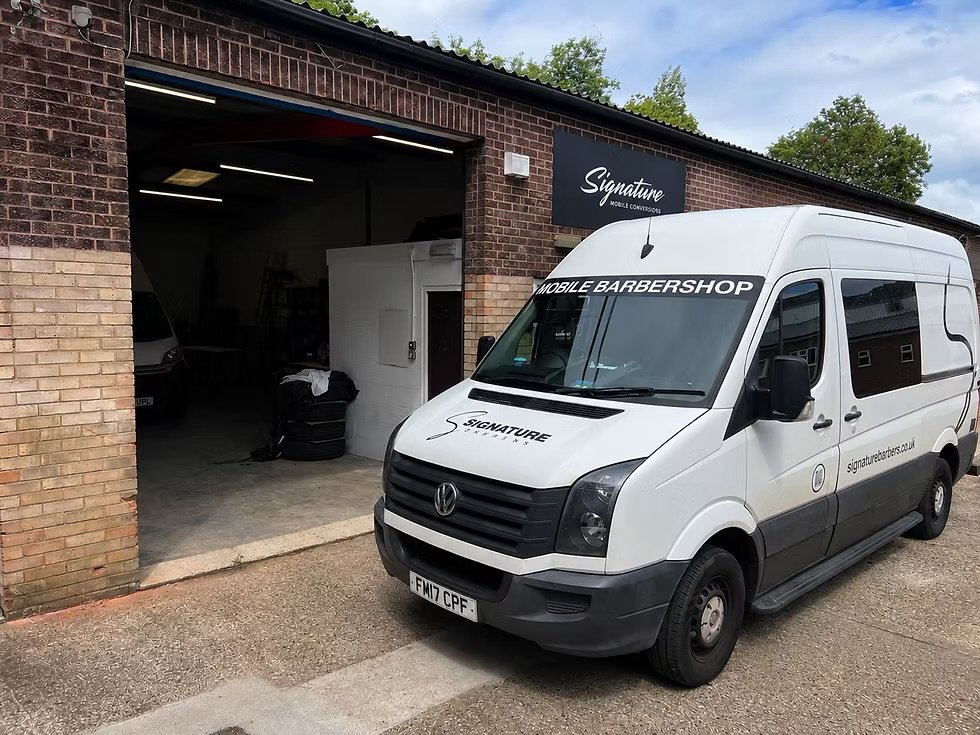
He had been filming and saving content while they worked on the van, so he was ready to launch Signature Barbers in January. The local newspaper and BBC radio contacted him, the bookings came in, and the business took off.
For around two years, it grew rapidly. The experience showed him that the opportunity was real, even though people around him had doubted it.
The video that changed everything
As Claxton documented the van build on YouTube and social media, barbers began asking how they could do it too. One of his high-ticket clients, a business owner involved in online courses and e-commerce, told him to turn what he had learned into a course.
The client pointed out that Claxton was already teaching people through his content, and that nobody was really leading or teaching this part of the barbering industry. The interest grew dramatically after Claxton posted an ASMR-style video of himself cleaning his mobile barbershop.
Claxton says the video reached more than 43 million views on Instagram, around 38 million on TikTok and around 5 million on YouTube, with millions more on Facebook. Barbers from all over the world flooded the comments and his messages, asking how he had done it and how they could start.
He shares behind-the-scenes footage from the workshop and conversations with fellow barbers on his YouTube channel.
He began building an email list, which grew to more than 800 people, and developed The Mobile Barbering Hub around the questions people were asking. He built the website and course himself, filming, editing and designing everything while learning as he went.
He started slowly, sharing content and opening up parts of the training as they were developed. The first full launch did not bring the number of sign-ups he had hoped for, and he was disappointed.
He and his wife even wondered whether they had imagined the opportunity too early. But he believed barbers needed this guidance, so he kept improving the training and the platform rather than giving up.
The goal is to help someone move from ‘I’d love to do this’ to understanding the business, planning the build and being able to launch.
Tyler Claxton
Three pillars
The training is organised into three pillars. The first is about developing the barber, preparing mentally for the move from a rented chair or traditional shop into mobile barbering, and understanding the challenges and changes that can come with it.
The second is about developing the business. It covers building a brand, setting up social media and a website, understanding the differences between operating as a sole trader or a limited company, planning and pre-launching, batching content, attracting clients, and the practical business decisions Claxton had to learn while growing his own service.
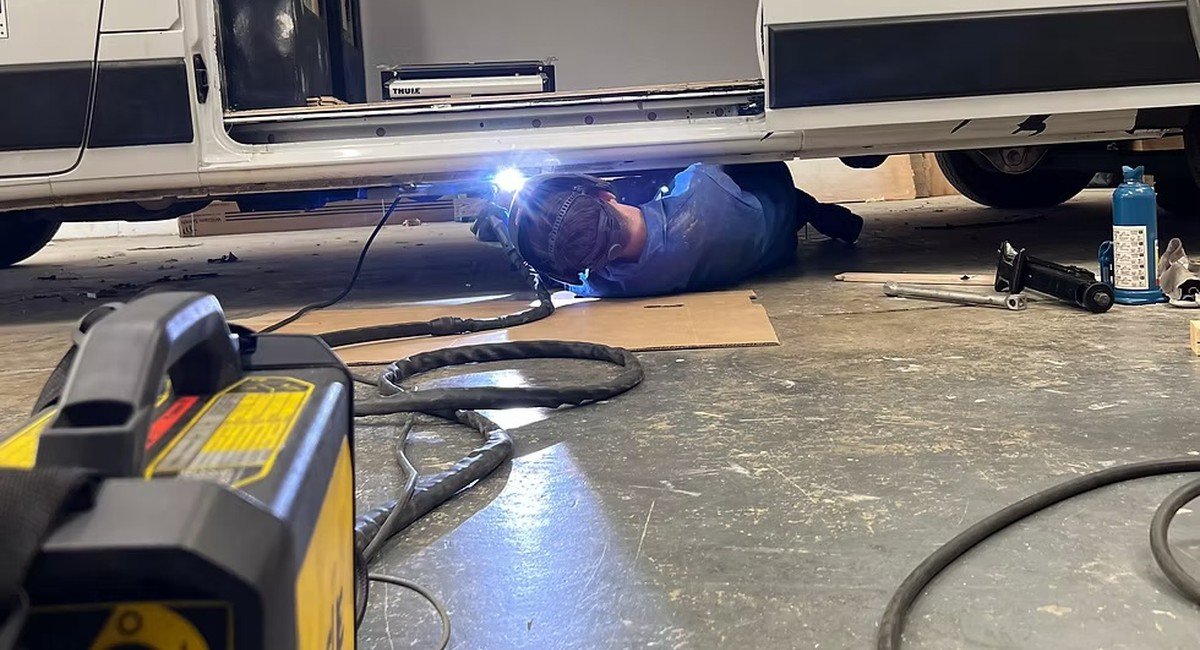
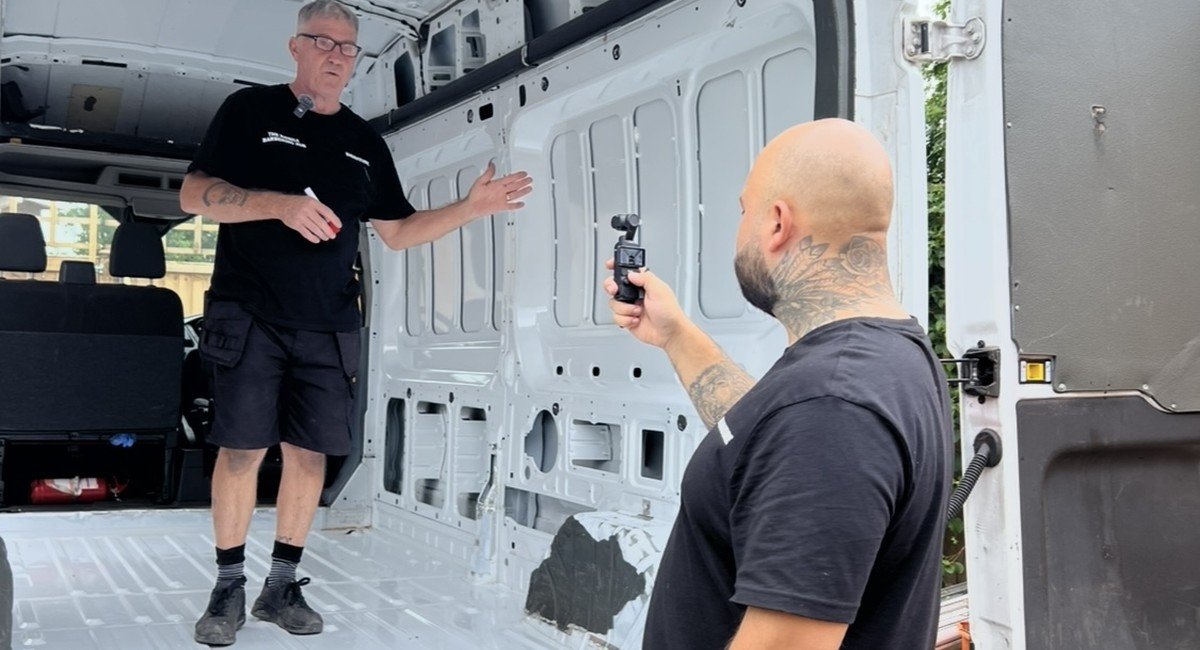
The third is about developing the build. His father Mark leads a detailed, practical section that takes students through the van conversion, including safety, tools and the stages of the work.
It is designed as a guide for barbers who want to build their own van at home, adapt the process to their situation, and use the people and resources they have around them. The Hub has also added a certificate of completion and a private members’ community where mobile barbers can connect and help each other.
The course has around 20 barbers enrolled, including people in the UK and the US. Some are still learning and planning their builds, while others have started converting their vans.
One student in the US, Steve, has completed his entire self-build using the course modules and is now preparing to launch his business. The Complete Mobile Barbering Blueprint costs £397 for lifetime access, according to the Hub’s website.
The family workshop
Signature Mobile Conversions came about while Claxton and his father were building the van they used to film the Blueprint. They had started a pre-launch so students could access early modules as they were created.
One of their UK students watched the build taking shape and asked what they planned to do with the van once they had finished converting it for the course. Claxton explained that they planned to sell it as a ready-made mobile barbershop, and she was interested straight away and put down a deposit.
They completed the build, added the branding and tailored it to her. That first sale made them realise the conversion work could grow into a business alongside the training.
Claxton took on a workshop lease and built the business around his father’s practical experience. Mark was around 62 and had spent his working life self-employed in construction, but did not have much retirement provision.
Claxton saw an opportunity to create a role his father could do with him, using his building skills to make something new. Mark now works on the conversions full-time.
They have built three ready-made vans and are about to start another. Each build is designed for the barber buying it, rather than being an identical, off-the-shelf setup.
They have also built vans for barbers at very different stages in their careers. One customer had owned a barbershop for 18 years, sold it and moved into a van.
Another was around two years into barbering, developed his skills and then invested in a ready-made van to go mobile full-time. Both are now on the road and enjoying the change.
They are aiming to build around six to eight ready-made vans next year from their UK workshop. Funding and cash flow are the main constraints on how quickly they can grow.
What comes next
Mobile barbering has changed Claxton’s own working life. He currently cuts hair four days a week and wants to gradually reduce that to around two days as he takes on more coaching and develops the other parts of the business.
He still serves regular clients, business owners and high-ticket clients who value the convenience. He has also had the opportunity to cut the hair of an actor from Peaky Blinders, and says he has recently signed a deal with Booksy.
In one video, Claxton shows an £800 payment for a single haircut, plus an £80 tip, after a five-hour drive to Leeds and back. The trip took 16 hours from start to finish.
The biggest change for him is having control of his schedule. He can decide when he works and when he takes time off.
A traditional shop has set opening hours, but with a mobile service he can take call-outs in the evenings and serve clients when other barbershops are closed. That flexibility gives him more ways to serve clients and earn from the convenience he provides.
I finally feel free in my career. If I want to work more, I can; if I want to work less or book time off, I can make that decision myself.
Tyler Claxton
The barbers they have helped or built vans for tell them they feel the same way. They enjoy the work, value the freedom and do not want to return to a traditional shop.
His next step is to strengthen the brands, reach a much wider audience and bring in the right investment, management and staff so the Hub and the conversion business can scale properly. He wants to spend more time coaching, build more vans and create more opportunities for barbers.
Longer term, they would like to run in-person training and pop-up events, and explore rentals and opportunities beyond the UK if they have the funding and team to support them. He loves what he does now, and wants to help as many barbers as possible find that same freedom in their careers.
Freedom is the product
Claxton’s story is not really about a van. It is about what the van removed: chair rent, fixed hours, and a boss who decided when he worked.
The barbershop industry has always sold skill by the hour, in a room someone else owns. Mobile barbering turns the room into an asset the barber owns, and the hours into a choice.
That is why the idea travels. The barbers asking Claxton how to do it are not asking for a van conversion guide.
They are asking for the freedom he found.
The risk is real too. Funding and cash flow are the main constraints on how fast the conversion business can grow, Claxton says, and the Hub’s first launch did not sell as hoped.
His answer was to keep improving the training rather than give up, and the conversion business grew out of the same instinct.



Leave a Reply