SAL Is Digitising Saudi Air Cargo From Tarmac to Collection

SAL Saudi Logistics Services is putting Saudi air cargo onto digital rails. The company, which handles more than 95% of the air cargo shipments moving through the Kingdom’s airports, has spent 2025 and 2026 replacing manual cargo processes with a customer platform, AI tools and data driven planning, and it signed two technology partnerships in September 2026 to push further.
CargoGate, the platform
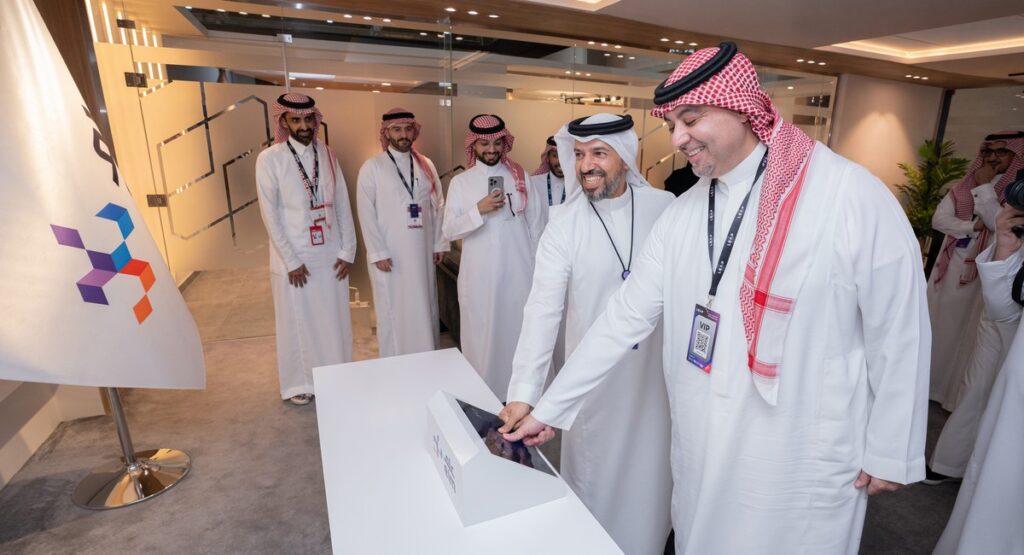
The centrepiece is CargoGate, built with Elm and launched at LEAP 2026 in Riyadh. It lets customers and service providers schedule pickup and delivery appointments, manage vehicle movement inside stations and track shipment procedures in one place, replacing the fragmented manual steps that used to govern collection. Its pilot ran at 92% adoption across the main stations in Riyadh, Jeddah, Dammam and Madinah.
SAL’s own annual report puts numbers on the shift. Waiting time fell by 80% on average, the programme optimised 190,000 working hours, equivalent to about 80 full time roles, and unlocked about SAR 17 million in productivity value. In 2025 the company delivered more than 45 digital initiatives with a 100% completion rate.
The AI layer
The AI layer sits behind the platform. The annual report lists AI enablement tools for employees, an AI avatar that works in Arabic and English, Cargo Radars for advanced planning, AI powered CCTV and security analytics, AI driven customer sentiment analysis, SAP integrated AI invoice reading, digital twins of selected cargo warehouses and real time operational dashboards for workload balancing, capacity planning and exception handling.
A run of partnerships
September 2026 added two partnerships. SAL signed an MoU with Microsoft Arabia at LEAP 2026 to explore AI, cloud and data analytics across its operations, and an MoU with Huawei Tech Investment Saudi Arabia in Shanghai to explore 5G, AI, cloud and green energy for logistics zones, plus a possible inventory and distribution hub for Huawei and SAL becoming an approved Huawei logistics provider.
Earlier, at LEAP 2025, SAL signed an MoU with stc Group on AI and Internet of Things in its stations, and in December 2025 it signed with Infinite PL on joint digital logistics for e-commerce, pharma, postal services and ground handling.
The physical base
The digital push sits on a large physical base. SAL was established in 2019 after separating from Saudia Cargo, operates 19 stations including the four hubs of Riyadh, Jeddah, Dammam and Madinah, and listed on the Saudi Exchange in November 2023.
It handled 961 million kilograms of cargo in 2025, and in August 2026 it completed the acquisition of Aviapartner Liège, its first international footprint. The Kingdom wants to lift annual air cargo volumes to 4.5 million tonnes by 2030 under its national transport and logistics strategy.
What the pattern means
What stands out to us is the pattern. SAL is not buying one system. It is building the platform that airlines, forwarders, customs brokers, transporters and government authorities all plug into, and it is letting global technology companies supply the AI, cloud and connectivity while it supplies the stations and the traffic. SAL’s own annual report describes digital as a value engine rather than an IT function, and the partnership pattern fits that description.
Two cautions keep the story honest. The Microsoft and Huawei agreements are memorandums to explore collaboration, not deployed systems, so the proven part of this story is CargoGate and the 2025 numbers, not the September headlines.
And the physical side still has to keep up. Volumes dipped slightly in 2025, to 961 million kilograms from 972 million, while the Kingdom’s 4.5 million tonne target for 2030 will need new cargo capacity as well as new software.


Leave a Reply