Faraj Rahil, the Libyan Freestyler Turning Football Tricks Into Cultural Pride
Faraj Rahil began practising freestyle football in Ajdabiya in 2014. More than a decade on, he is a Libyan champion performing in traditional attire for a global online audience.

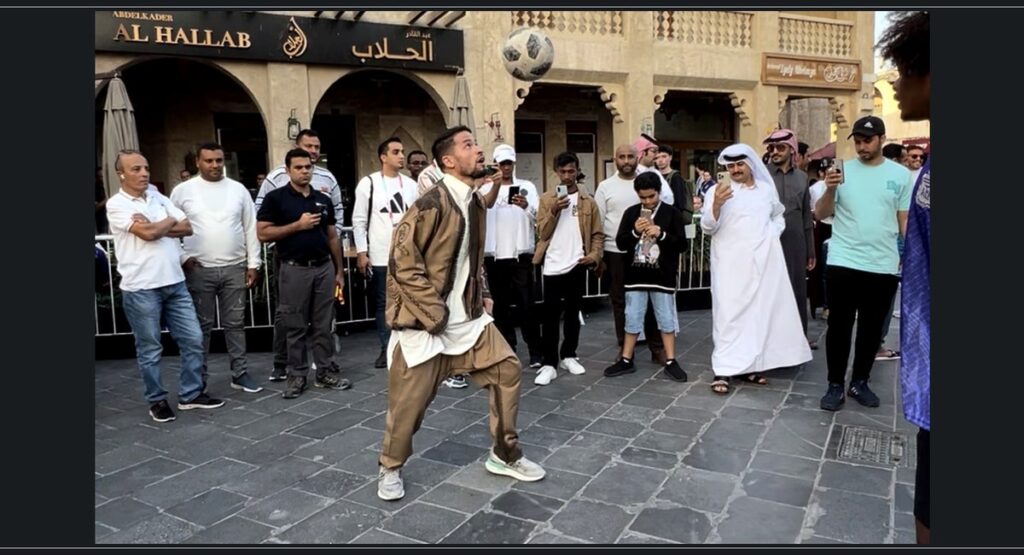
Watch Faraj Rahil perform and the first thing you notice is not only the ball. It is the control, the rhythm and the crowd that gathers to watch a Libyan athlete turn a football into a performance.
Faraj Rahil, known as Rahil Freestyle, is a freestyle football athlete and content creator from Ajdabiya, Libya. He began practising freestyle football in 2014, and what started as individual practice has grown into a national title and a global audience.

From practice to the national stage
Freestyle football is built on ball control, creativity and style, with athletes judged on how inventively they move with the ball. Faraj built those skills through years of individual practice and public performances, learning in front of real audiences rather than only in training.
That long apprenticeship became the foundation for his breakthrough. In 2020, he won the 1v1 battles at the Libyan national championship.
From Ajdabiya to the regional stage
He then became Libya’s national champion for Red Bull Street Style 2022, progressing to the online regional final. The step put a Libyan freestyler on a stage watched far beyond his home city.
The World Freestyle Football Association has also provided an official acknowledgement of his achievements.
Freestyle football in Libya
Faraj hopes to help more young people discover freestyle football and contribute to the sport’s growth in Libya and across Africa. Greater visibility, opportunities to train and compete, and access to an established freestyle community are important to helping athletes develop.
His own work aims to make the discipline more visible to audiences at home and abroad. That is the larger story behind his performances, because every public show is also an invitation to a young Libyan to pick up a ball and try.
Culture and identity
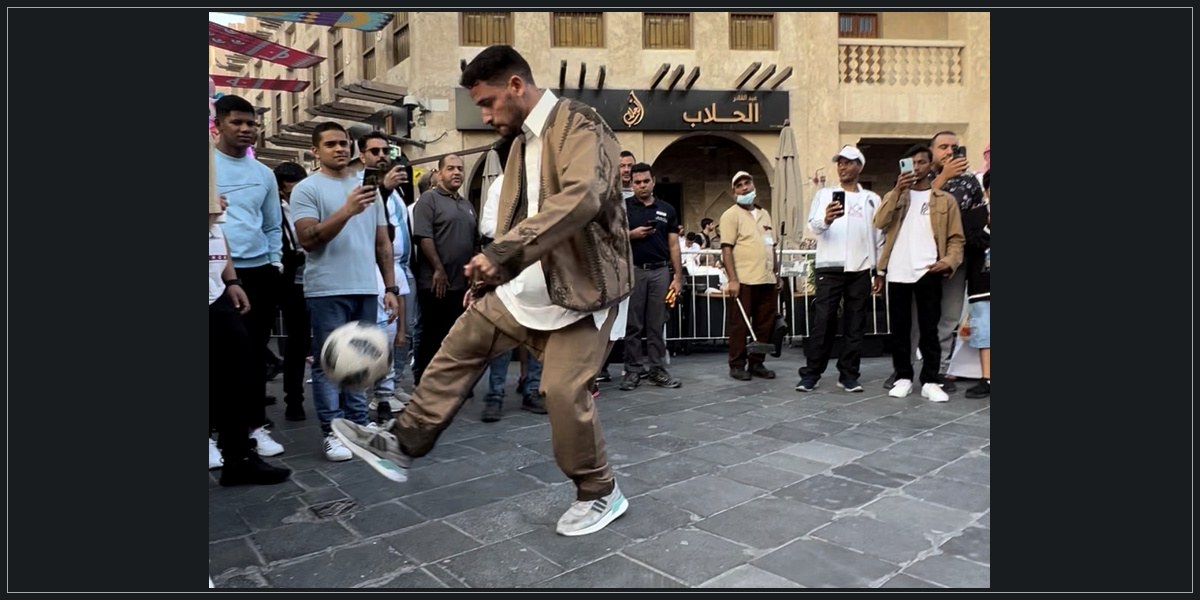
A distinctive part of Faraj’s performances is his use of traditional Libyan attire. For him, freestyle can be more than a display of technical skill.
It can also be a way to present Libyan identity and heritage to audiences who may be unfamiliar with the country. The contrast between a modern global street sport and traditional clothing gives his performances a recognisably Libyan character.
The attire changes how the performance reads. It turns a trick into a statement about where he comes from, and it makes his work instantly recognisable in a feed full of similar skills.
Football and content creation
Faraj shares his performances through Instagram, TikTok and YouTube, and that sharing is how a local performer became a global one. A viewer who had never seen Libyan freestyle could discover him online, watch him perform in traditional attire, and stay for the next video.
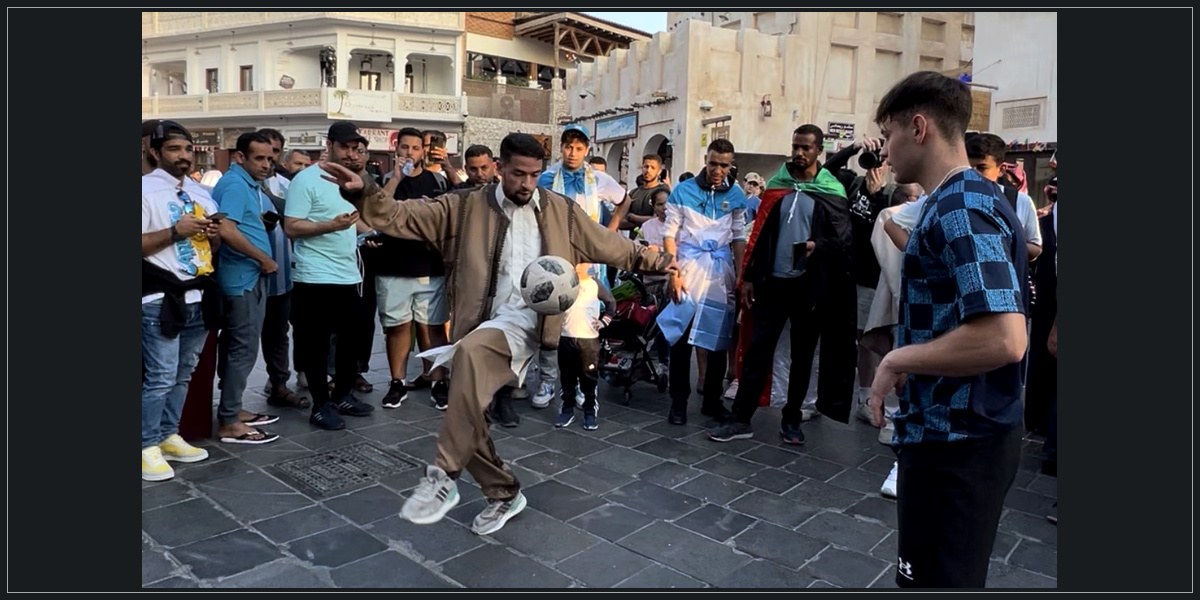
The distinctiveness helped him stand out. In a feed full of football tricks, the Libyan attire and the crowd around him made his work recognisable, while the national title marked him as a champion rather than just another creator.
Over time, that consistency built the audience. Today he has more than 154,000 followers on TikTok, with 1.9 million likes and more than 500 videos, and nearly 40,000 followers on Instagram.
He wants his journey to encourage young people to practise, be creative and represent their country with pride.
He also wants freestyle football to gain a stronger presence in Libya and across Africa.
What comes next
His goals are to continue developing as a freestyle athlete and content creator and to reach wider international audiences. He also wants to inspire young people and help build more opportunities for freestyle football in Libya.
If his journey so far says anything, it is that a ball, a practice habit and a clear sense of identity can carry a Libyan athlete from Ajdabiya to a global audience. The next chapter is about making sure others can follow.



Leave a Reply