Dubai’s Dh20.5 Billion Blue Line Is Nearly 30% Complete. Here Is What the Numbers Actually Mean
Dubai’s Blue Line is 29% complete, with tunnelling more than half done and the new trains revealed. It opens on September 9, 2029, and the pace of work is now running at about what the schedule needs.

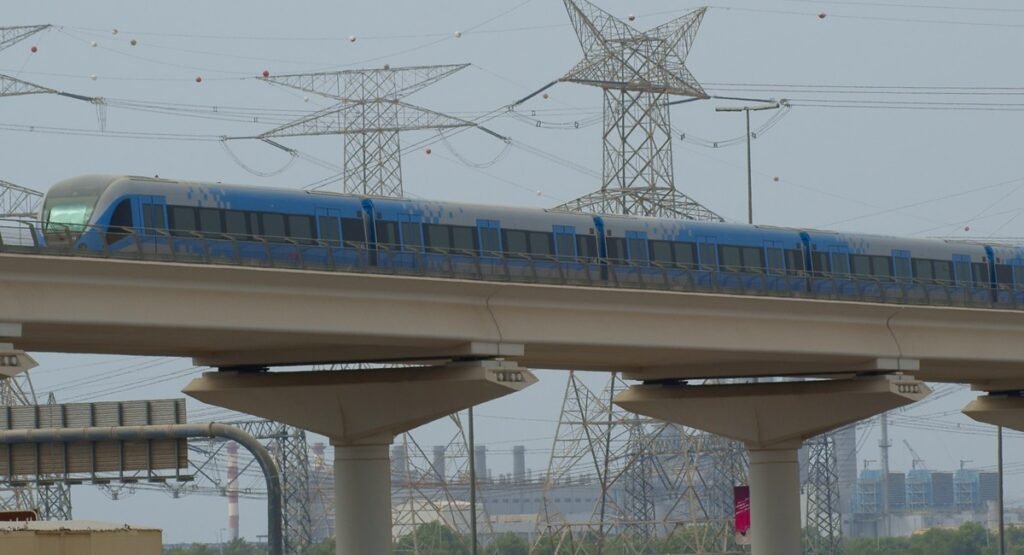
Dubai’s biggest metro expansion in 17 years is nearly a third built. The Blue Line stood at 29% complete when Sheikh Hamdan bin Mohammed bin Rashid Al Maktoum inspected progress at Dubai Festival City on November 22.
The headline figure is only part of the story. Tunnel excavation is 55% done, bridge piers are 62% complete, and the new trains that will run on the line have now been revealed.
The milestone in numbers
A team of 14,000 workers, engineers and supervisors has logged 33 million working hours on the project. The Roads and Transport Authority (RTA) is delivering the Dh20.5 billion line with the MAPA, LIMAK and CRRC consortium.
| Part of the project | Complete |
|---|---|
| Overall | 29% |
| Tunnel excavation | 55% |
| Bridge piers | 62% |
| Underground stations | 32% |
| Elevated stations | 16% |
| Bridge works | 17% |
The line is due to open on September 9, 2029, exactly 20 years after Dubai Metro first opened. It was 20% complete in May and about 24% in September, so the pace has picked up through the autumn.
Today, I reviewed progress on the Dubai Metro Blue Line project during a visit to Dubai Festival City. The project is nearly 30% complete, with a team of 14,000 workers, engineers and supervisors having clocked 33 million working hours.
Work is gathering pace ahead of the scheduled opening on 9 September 2029.
Sheikh Hamdan bin Mohammed bin Rashid Al Maktoum, Crown Prince of Dubai
The new trains
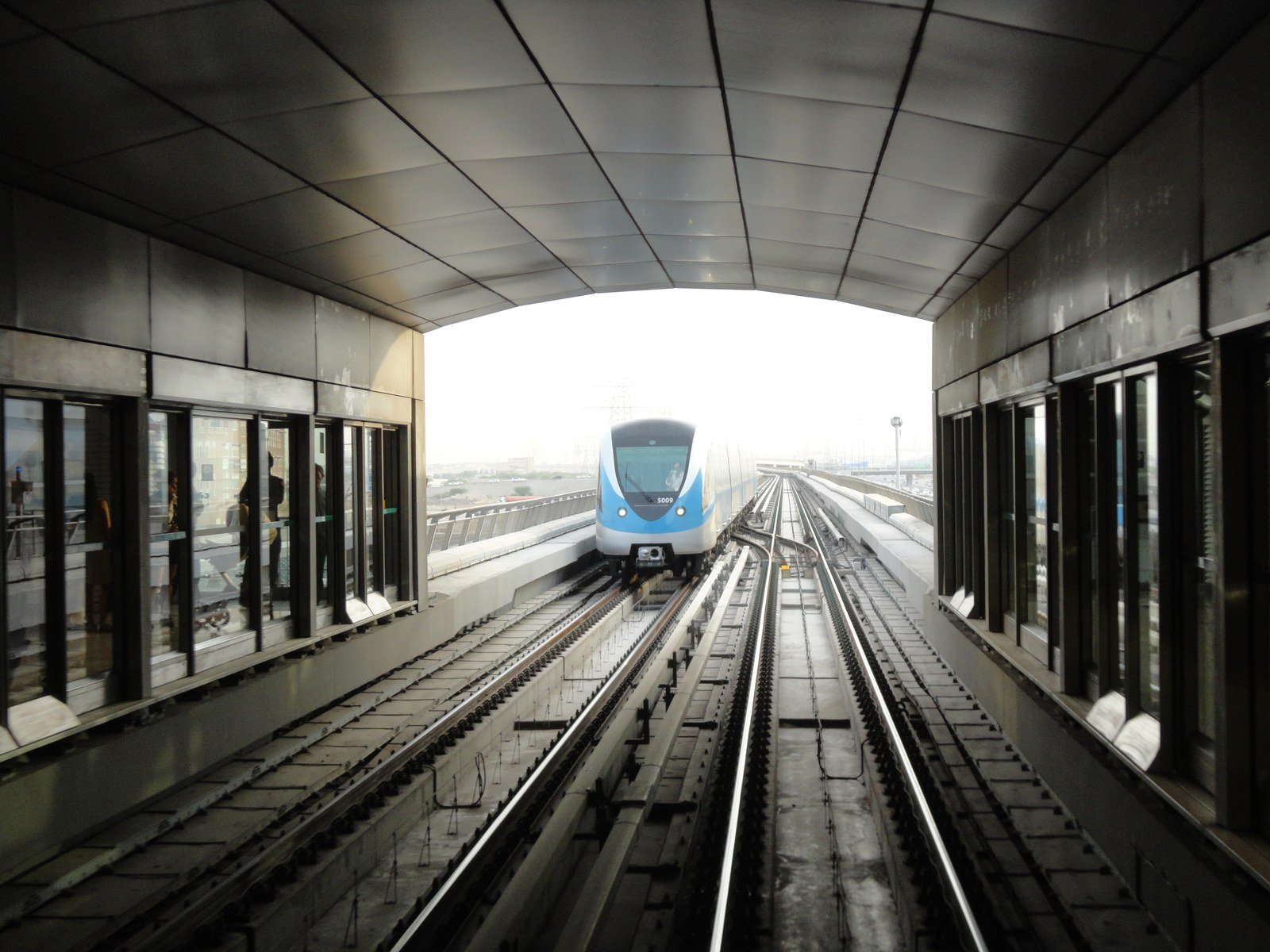
Each Blue Line train will carry up to 1,246 passengers. Interiors will include Gold Class, Silver Class and a dedicated carriage for women and children, with wireless charging in Gold Class.
The trains will also carry smart systems that set them apart from the current fleet. Cameras will detect obstacles on the track, count passengers and monitor occupancy, with real-time image and data processing.
The RTA is also building a research and development centre with CASCO Signal. It will house the Middle East’s first train systems development laboratory, and the RTA plans to use robotics and artificial intelligence in railway inspection and maintenance.
Station interiors will follow five distinctive architectural concepts. The most striking is the signature station at Dubai Creek Harbour, designed by Skidmore, Owings and Merrill, the firm behind the Burj Khalifa, with room for 160,000 passengers a day.
Where the line goes
The Blue Line will run 30 km, with 15.5 km underground and 14.5 km elevated. Its 14 stations include three interchanges, at Al Khor on the Green Line, Centrepoint on the Red Line and International City 1, where the line’s two branches meet.
The main route runs 21 km from Al Khor through Dubai Festival City, Dubai Creek Harbour and Ras Al Khor to International City, then on through Dubai Silicon Oasis to Dubai Academic City. The second branch runs 9 km from Centrepoint through Mirdif and Al Warqa to International City 1.
The line will cross Dubai Creek on a 1,300 metre bridge, the first Creek crossing in the metro’s history. A depot is being built at Al Ruwayyah 3, and International City 1 will be the largest underground interchange in the network, built to handle 350,000 passengers a day.
Why tunnelling at 55% matters more than the headline 29%
Look past the headline figure and the picture improves. Tunnelling is the slowest and least reversible part of a metro build, and at 55% it is more than half done, while the elevated stations and bridge decks that read lowest are the fastest sections to build once piers stand.
The piers tell the same story. At 62% complete, the foundations for the elevated sections and the Creek crossing are largely in place, which is what lets the visible work accelerate from here.
The schedule arithmetic points the same way. Progress ran at about a point a month over the summer, then about two points a month since September, and roughly two points a month is what the remaining 34 months require to reach the September 2029 opening.
The line also changes who the metro serves. International City alone houses more than 200,000 residents and visitors, Dubai Academic City is expected to host over 50,000 university students by 2029, and the line is designed to serve about one million residents by 2040.
The RTA expects the line to carry nearly 200,000 passengers a day by 2030, rising to 320,000 by 2040. It projects AED 2.60 in economic, social and environmental benefits for every dirham invested, with total benefits above AED 56.5 billion by 2040.
Property is the number to watch next. The RTA expects land and property values around Blue Line stations to rise by up to 25%, and congestion on key road corridors to fall by 20%.
The Blue Line is not the only metro expansion under way. Sheikh Hamdan has also approved a Dh2 billion extension linking Route 2020 with Al Maktoum International Airport City, so the network is growing at both ends at once.
What happens next
Construction continues toward the RTA’s target of 30% by the end of 2026, a mark the project is now within a point of reaching.
Dubai Metro has carried nearly 2.5 billion riders since it opened on September 9, 2009, and now carries more than 850,000 people a day. The Blue Line opens on the 20th anniversary of that first journey, and it is being built to carry 320,000 of them a day by 2040.



Leave a Reply