ADNOC Signs ADIO and KEZAD Deals to Power UAE Industrial Growth
ADNOC has signed agreements with ADIO and KEZAD Group and opened more than AED 60 billion in local manufacturing opportunities through 2030. The package also overhauls supplier registration and the In-Country Value model to make it faster and simpler to compete for ADNOC work.

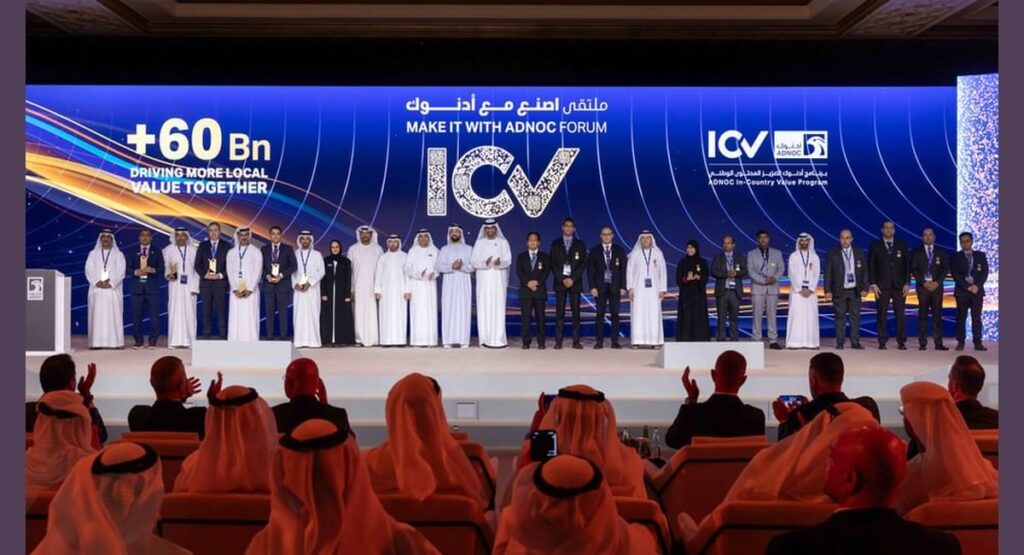
ADNOC has signed two agreements with the Abu Dhabi Investment Office and KEZAD Group to support industrial development and local manufacturing in the UAE. The package was announced on Sunday at the second Make it with ADNOC Forum in Abu Dhabi, where ADNOC also unveiled more than AED 60 billion in local manufacturing opportunities through 2030.
The package combines opportunities to manufacture more than 200 essential products and a broad portfolio of critical spare parts locally with expanded support for industrial investment, simpler qualification requirements and longer-term commercial partnerships. It is designed to turn ADNOC’s growth into industrial investment, skilled jobs and stronger supply chains across the UAE.
“ADNOC’s growth creates a powerful opportunity to deepen the UAE’s industrial strength.”
His Excellency Dr Sultan Ahmed Al Jaber, UAE Minister of Industry and Advanced Technology and ADNOC Managing Director and Group CEO.
What the ADIO and KEZAD agreements cover
ADNOC, the Ministry of Industry and Advanced Technology and ADIO will collaborate to connect local manufacturing opportunities with national industrial support. The collaboration brings together visibility of ADNOC’s demand, access to the national industrial database and financing through the National Industrial Resilience Fund.
The two agreements with ADIO and KEZAD Group sit alongside that collaboration, supporting ADNOC’s industrial development and local manufacturing objectives. Together with long-term procurement opportunities, the approach is designed to help manufacturers turn identified demand into viable industrial investments, supporting the objectives of Make it in the Emirates.
AED 60 billion of opportunities through 2030
The manufacturing opportunities span critical products supporting ADNOC’s projects and operations, including rotating equipment and power, electrical, control and automation systems, drilling and completion equipment, chemicals and catalysts, piping, fabrication and heavy equipment, and spare parts and advanced manufacturing.
Many of the identified products are currently imported. Manufacturing them in the UAE shortens lead times, reduces exposure to global supply disruptions and strengthens the resilience of ADNOC’s operations.
Local+ grows to more than 100 manufacturers
ADNOC also expanded its Local+ programme to more than 100 UAE manufacturers, up from 70 at its launch in May 2026.
Local+ gives UAE-made products priority in ADNOC’s projects by requiring engineering, procurement and construction contractors participating in new tenders to source relevant products from approved manufacturers on the list. The expansion broadens the range of locally manufactured products available to ADNOC’s projects and supply chain.
“Every product we can competitively manufacture here strengthens our ability to deliver.”
His Excellency Dr Sultan Ahmed Al Jaber, UAE Minister of Industry and Advanced Technology and ADNOC Managing Director and Group CEO.
Faster registration and a new ICV model
A comprehensive redesign of supplier registration and prequalification targets a reduction of up to 80 percent in the time needed to complete the process and become ready to compete for ADNOC opportunities. The new model halves the number of required documents and removes prequalification requirements for 60 percent of service categories.
A single window brings together registration, qualification and compliance, with requirements tailored to the nature of the work and its level of risk. Artificial intelligence will support document verification and the reuse of existing data, reducing repetitive submissions and administrative processing.
ADNOC’s enhanced In-Country Value model will more closely connect procurement decisions with commercial value and suppliers’ contribution to the UAE economy. Under the new model, commercial and ICV offers will be integrated into a single evaluation model, and the previous bid-matching approach will be retired, encouraging suppliers to submit their most competitive commercial and ICV offers from the outset.
Requirements will be proportionate to contract size and scope. Where retention applies, automated calculation and release processes through the ADNOC Supplier Hub will improve transparency, reduce manual follow-up and support suppliers’ cash flow as obligations are met.
ADNOC also unveiled a refreshed identity for its ICV programme, reflecting its evolution over eight years into a broader platform for industrial development, investment, employment and supplier competitiveness. Alongside the changes, ADNOC outlined a new commercial approach built around four strategic shifts, agile, competitive, strategic and forward-looking, advancing simpler procurement, faster decision-making, contracting models aligned with project and market dynamics, targeted commercial negotiations and earlier visibility of future demand.
Eight years of In-Country Value
The forum marked eight years of ADNOC’s ICV programme and recognised companies, employees and strategic partners through the launch of the ADNOC ICV Excellence Awards. A number of selected companies were honoured for their contribution to national value creation, including local manufacturing, Emiratisation and supplier development, and ADNOC employees were recognised as ICV Champions.
ADNOC also commended its resilience partners, who responded to urgent requirements during recent disruptions, supplying critical materials and services and helping maintain operational continuity.
Since its launch in 2018, ADNOC’s ICV programme has helped turn the company’s purchasing power into wider economic opportunity. By the end of 2025, the programme had redirected more than AED 307 billion into the UAE economy.
It has also supported the localisation of more than 130 products, the development of 95 UAE factories and employment opportunities for more than 27,500 Emiratis in participating private-sector companies.


Leave a Reply