Restaurant Insurance in the UAE: The Covers You Must Have, the Ones Landlords Demand and What They Cost
Health cover for staff is mandatory across all seven emirates, landlords and Dubai Municipality expect public liability, and the real cost of going without cover is a single bad day in the kitchen. Here is what a restaurant in the UAE actually needs, what it costs, and where operators get caught out.

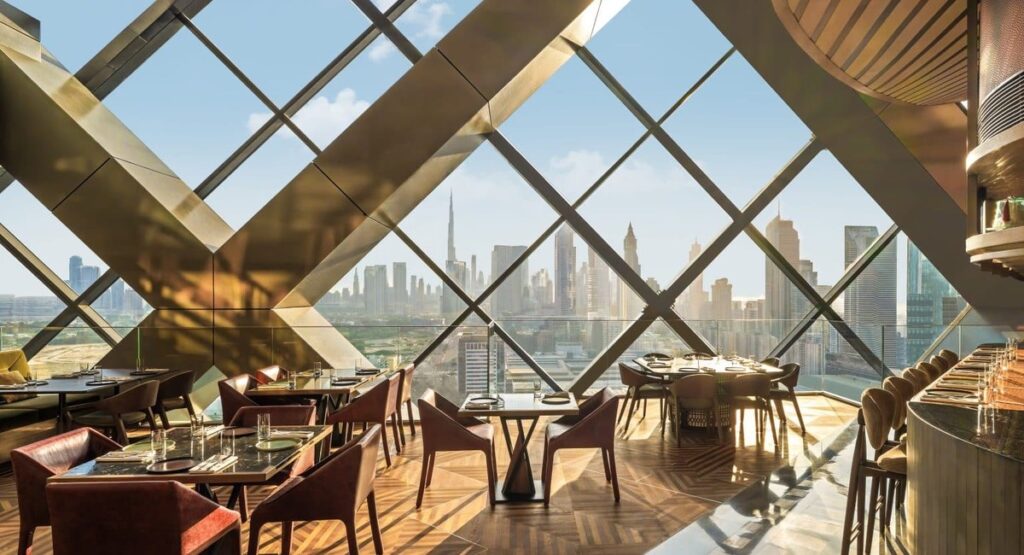
Running a restaurant in the UAE comes with its own set of risks. From kitchen fires and equipment breakdowns to food safety issues, property damage and customer-related incidents, restaurant owners have to deal with challenges that can affect both daily operations and long-term business stability.
However, the right insurance coverage can do more than protect a restaurant from unexpected losses. It can also help operators meet regulatory requirements, fulfill landlord obligations and maintain compliance with applicable UAE regulations.
We have prepared this guide to help restaurant owners understand the insurance they need, the coverage to consider and the costs involved. The information is based on our research, supported by insights from insurance experts with years of experience in the industry, to provide a practical understanding of restaurant insurance in the UAE.
The short answer
The covers below fall into three groups: those the law requires, those a landlord or the municipality expects, and those a careful operator adds. A restaurant that holds the first two groups can open its doors, and a restaurant that holds all three can survive a bad week.
| Cover | Status | Who requires it | What it does |
|---|---|---|---|
| Health insurance for staff | Mandatory | Federal law, all seven emirates | Medical care for employees; no residence visa is issued or renewed without it |
| Work injury cover | Liability is mandatory | Federal Decree-Law No. 33 of 2021 | Treatment, wages and compensation after a workplace injury or occupational disease |
| Motor insurance, third-party | Mandatory | UAE traffic law | Injury and damage caused by the restaurant’s own delivery vehicles |
| Public liability | Required in practice | Dubai Municipality, mall landlords | Injury or damage to customers and other third parties |
| Property and fire | Required in practice | Landlords, lease terms | Fire, theft and damage to premises, fit-out, equipment and stock |
| Product liability | Strongly recommended | Not legally required | Food poisoning and contamination claims from customers |
| Business interruption | Strongly recommended | Not legally required | Rent, wages and lost profit during a forced closure |
| Liquor liability | Required if licensed | Liquor licensing conditions | Incidents involving intoxicated patrons |
What the law actually requires
Three covers sit on the legal side of the line. Health insurance for staff is the clearest, work injury liability is the one operators misunderstand most, and motor cover applies the moment a delivery bike leaves the kerb.
Health insurance for every employee
Since 1 January 2025, every private-sector employer in all seven emirates must provide health insurance for staff, and no residence visa is issued or renewed without valid cover. The employer pays the premium, and the cost cannot be deducted from the employee’s salary.
The federal Basic Health Insurance package costs AED 320 a year per person and covers inpatient and outpatient care, chronic and pre-existing conditions with no waiting period, up to an annual limit of AED 150,000. It does not cover pregnancy, childbirth or dental care, and it carries co-payments of 20 percent on inpatient care, 25 percent on outpatient visits and 30 percent on medication.
Dubai and Abu Dhabi run their own schemes on top of the federal floor. Dubai’s Essential Benefits Plan, run by the Dubai Health Authority, costs AED 535 a year for an employee earning AED 4,000 a month or less, while Abu Dhabi requires employers and sponsors to cover employees and their families.
Work injury: the liability is mandatory, the policy is how you pay for it
Federal Decree-Law No. 33 of 2021 makes the employer responsible for a worker’s treatment and compensation after a work injury or occupational disease, whether or not the business holds insurance. The law does not force a mainland employer to buy a workmen’s compensation policy, but it does force the employer to pay the bill.
That bill is specific. The employer covers the full cost of treatment until the worker recovers or a disability is confirmed, pays full wages during treatment for up to six months and then half wages for up to another six months, and pays 24 months of basic wage to the family if a worker dies, with a minimum of AED 18,000 and a maximum of AED 200,000.
Every work injury must be reported to the Ministry of Human Resources and Emiratisation within 48 hours. A workmen’s compensation policy transfers all of these costs to an insurer, which is why most restaurants carry one even though the policy itself is not a federal legal requirement.
Motor cover for delivery
Any vehicle a restaurant owns or operates, including a delivery bike, needs at least third-party motor insurance under UAE traffic law. Third-party aggregators such as Talabat and Deliveroo insure their own riders, but a restaurant that employs its own riders carries the motor and work injury risk itself.
Separately, the Involuntary Loss of Employment scheme is mandatory for employees, at AED 5 a month for a basic salary up to AED 16,000 and AED 10 a month above that, plus VAT. The employee pays it, though an employer may choose to cover it.
What landlords and Dubai Municipality require
Beyond the law, two more parties shape what a restaurant must hold. Dubai Municipality expects public liability cover as part of the food establishment approval process, and almost every mall and commercial landlord in the UAE requires it as a lease condition.
Public liability
Public liability covers claims from customers and other third parties for injury or property damage caused by the business. A customer who slips on a wet floor, a bag damaged by a falling sign, or a diner hurt by a faulty chair all fall under this cover.
Typical limits run from AED 1 million to AED 5 million, and landlords usually set the minimum. A restaurant that cannot show a valid public liability certificate will struggle to sign a lease in a mall or a managed building.
Property and fire
Property cover protects the premises, the fit-out, the kitchen equipment and the stock against fire, theft and damage. Most landlords require it as a lease condition, and a restaurant kitchen, with its gas lines, fryers and electrical load, is one of the higher fire risks a commercial insurer sees.
Civil Defence approval is a separate requirement for opening, and it is not insurance. The approval confirms the premises meets fire safety standards, while the policy pays for the damage if a fire happens anyway.
What a careful operator adds
Four covers sit beyond the mandatory and lease-required list, and each one answers a risk that is specific to food businesses.
Product liability and food contamination
Product liability covers claims when food makes a customer ill, including medical costs, legal defence and the cost of investigating the incident. A single food poisoning claim can run far beyond the cost of the meal, and this is the cover that answers it.
Business interruption
Business interruption pays rent, wages and lost profit while a restaurant is closed after an insured event such as a fire or a flood. Most policies offer an indemnity period of 12 to 24 months, and the right length depends on how long a rebuild and re-licensing would actually take.
Refrigeration breakdown and spoilage
A failed chiller can destroy a week’s stock overnight. Refrigeration breakdown cover pays for the repair and for the spoiled food, and it is often bundled into a restaurant package rather than sold on its own.
Liquor liability
A restaurant with a liquor licence needs liquor liability, which covers incidents involving intoxicated patrons. Typical limits run from AED 2 million to AED 5 million, and the cover is a condition of holding the licence.
What it costs
Premiums vary by emirate, location, size, covers and claims history, so the figures below are indicative starting points drawn from broker quotes for small to mid-size restaurants. They are a budgeting guide, not a quote.
| Cover | Indicative annual premium | Notes |
|---|---|---|
| Health insurance, per employee | AED 320 to AED 535 | Federal basic package AED 320; Dubai Essential Benefits Plan AED 535 |
| Public liability, AED 1 million limit | From AED 900 | Higher limits raise the premium |
| Public and product liability | From AED 3,800 | Common bundle for restaurants |
| Restaurant package, bundled | From AED 2,800 | Small cafe, 30 seats, including fire, theft, public liability and spoilage |
| Cloud kitchen cover | AED 2,000 to AED 5,000 | Basic to comprehensive, including equipment breakdown |
| Total annual insurance, mid-size restaurant | AED 8,000 to AED 40,000 | Depends on size, location, liquor licence and covers |
Indicative starting annual premiums
Starting premiums from broker quotes for small to mid-size restaurants. Actual premiums vary by size, location, covers and claims history.
A small cafe can put a bundled package in place from around AED 2,800 a year. A mid-size restaurant with a liquor licence, delivery riders and a larger team should expect AED 8,000 to AED 40,000 a year for the full stack, and the premium is small next to the cost of a single uninsured week of closure.
How to buy it properly
Buy from an insurer or broker licensed by the Central Bank of the UAE, which regulates the insurance market. An unlicensed seller cannot be chased through the regulator if a claim goes wrong.
Read the exclusions before the price. The cheapest policy is often the one that excludes the exact risk a restaurant faces, such as cooking-media fires, food contamination or delivery, and the exclusion only becomes visible when a claim is refused.
Keep food safety paperwork current, because it is a precondition for a valid claim. A Person in Charge certified in food safety must be present during all shifts, every food handler needs a health card, and larger kitchens and caterers need HACCP certification.
An insurer can refuse a food-related claim if the restaurant was not compliant when the incident happened.
Where restaurants get caught out
Underinsuring the fit-out
A restaurant that insures its kitchen for AED 200,000 when the replacement cost is AED 500,000 will have any claim reduced in proportion, and the shortfall comes out of the owner’s pocket. The premium saving is small, and the gap only shows up when a claim is paid.
Forgetting delivery when the model changes
A restaurant that switches from aggregator riders to its own riders, or the other way round, needs to update its motor and work injury cover at the same time. The risk moves with the employment, and a policy written for one model does not cover the other.
Letting food safety lapse
A lapsed Person in Charge certificate or an expired food handler card does not just risk a fine from Dubai Municipality. It can void a product liability claim at the moment it is needed most.
Buying the cheapest health plan
The basic package meets the legal floor, but experienced kitchen and front-of-house staff compare benefits when they choose an employer. A thin policy shows up in hiring, and the saving is lost in turnover.
Insurance is the licence to keep trading
A restaurant’s real asset is not its tables or its kitchen, it is the right to keep serving. A fire, a food poisoning claim or a serious kitchen injury can each take that away for weeks or months, and the businesses that reopen are the ones whose insurance paid the rent and the wages while the doors were shut.
The premium for a small restaurant is less than a week of revenue. The cost of going without it is the business itself.
That is the calculation that matters, and it is why the covers on this list are not a compliance exercise but the foundation a restaurant is built on.