UAE Vibe Codes Lets Anyone Build a Website or App in Minutes, No Coding Needed
The UAE Artificial Intelligence Office has launched UAE Vibe Codes with Microsoft, turning ideas described in plain language into working prototypes in minutes. It drew 5,000 participants in its first hour on UAE Codes Day, 29 October 2026.

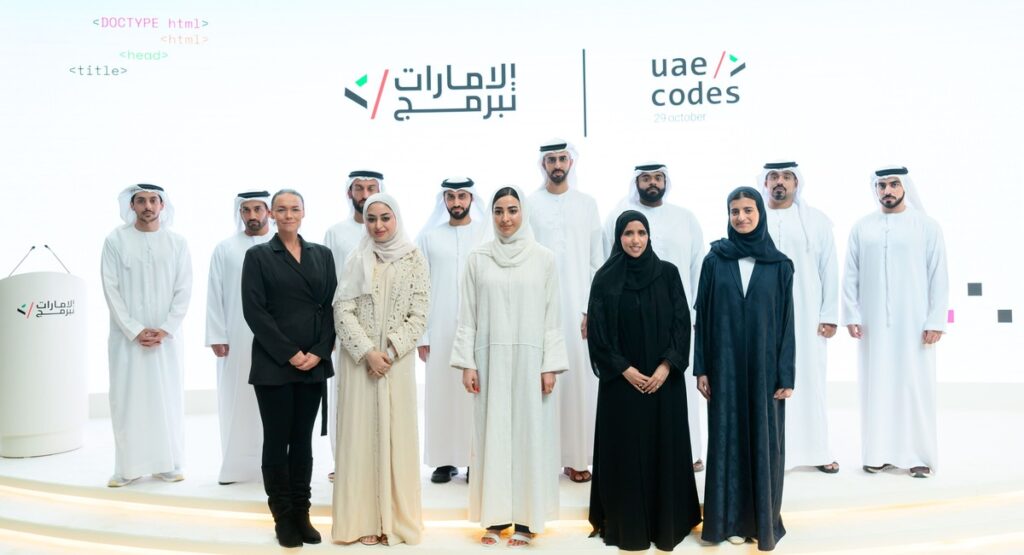
The UAE Artificial Intelligence Office has launched UAE Vibe Codes, a nationwide experience that lets anyone turn an idea into a website or digital application in minutes. It was launched on UAE Codes Day, 29 October 2026, under this year’s theme of Vibe Coding, and developed in collaboration with Microsoft.
The experience drew 5,000 participants in its first hour of launch. That early response is the headline number in the official announcement, and it signals how much appetite there is for AI tools that do the building, not just the explaining.
From an idea to a prototype in minutes
Vibe coding works by putting the idea first. A participant describes what they want in natural language, and AI tools translate that description into a working prototype of a website or application.
No prior programming experience is needed. Participants can try it through the UAE Vibe Codes platform, and in a few minutes they can discover what vibe coding can do, with the emphasis on the idea, its purpose and the desired outcome, rather than on the code itself.
The suggested starting points are deliberately everyday. A website to address a workplace challenge, an application to organise daily tasks, a digital tool to support a startup, or an innovative educational solution.
The true value of AI lies in its ability to expand the horizons of human innovation and unlock new possibilities for turning ideas into reality.
His Excellency Omar Sultan Al Olama, Minister of State for Artificial Intelligence.
Who the experience is for
The experience is open to people across the UAE, regardless of age, background or field. That includes students, educators, entrepreneurs, business owners and employees in the government and private sectors.
Participation in UAE Codes Day is broad. Government entities, private sector organisations and entrepreneurs taking part include the Ministry of Education, the Ministry of Justice, the General Authority of Islamic Affairs, Endowments and Zakat, the UAE Space Agency, Dubai’s Roads and Transport Authority, Etisalat UAE, du, Emirates Health Services, Emirates NBD and Furjan Dubai.
Workshops, partners and screens
Beyond the platform, the AI Office is running hands-on workshops in collaboration with Google, Emirates Global Aluminium, Siemens and IBM. The workshops introduce participants to vibe coding and guide them from identifying an idea or challenge to building an initial digital prototype with AI tools.
To extend the initiative’s reach, the AI Office is also collaborating with Emaar and cinemas across the UAE to promote UAE Vibe Codes through their digital screens and platforms. That distribution choice matters, because it takes the experience to people who were not already looking for a coding event.
A date with 25 years of history
UAE Codes Day is celebrated annually on 29 October, after His Highness Sheikh Mohammed bin Rashid Al Maktoum, Vice President and Prime Minister of the UAE and Ruler of Dubai, directed in October 2021 that the date be designated as UAE Codes Day.
The date commemorates two milestones in the UAE’s digital transformation. The first is the launch of the region’s first e-government initiative on 29 October 2001, and the second is the announcement of Dubai Internet City on the same date in 1999.
In November 2023, UNESCO adopted the UAE’s proposal to designate 29 October as the International Day of Programming. That recognition, recorded in the Emirates News Agency’s own Codes Day announcement, is why this year’s launch carries more weight than a one-day event.
What the first hour does and does not prove
The significance of UAE Vibe Codes is not that AI can write code, that is already well known. It is that a government is treating code generation as a public skill, open to everyone, rather than a specialist profession.
The 5,000 participants in the first hour should be read carefully. It is a sign of demand, reported by the AI Office itself, and it measures interest in trying the experience, not the quality of what was built in that hour.
That distinction is the one to watch. A prototype in minutes is not a finished product, and organisations that adopt vibe coding will still need to think about security, maintenance and who owns a prototype once it becomes a real service.
For the UAE’s workforce, the nearer-term effect is more practical. Employees, students and founders can now test an idea as a working prototype before asking for budget, a developer or a formal project, which shortens the distance between having an idea and showing it to someone.
The workshop and cinema partnerships point the same way. Google, Siemens, IBM and Emirates Global Aluminium bring the skills angle, while Emaar screens and cinemas bring the audience, and together they suggest this is meant as a national habit, not a one-day event.

Leave a Reply