UAE and Canada Sign CEPA to Double Bilateral Trade to $7 Billion
The UAE and Canada have signed a Comprehensive Economic Partnership Agreement in Ottawa after a record 47-day negotiation. The deal cuts tariffs on more than 99% of Canadian exports and aims to double two-way trade to $7 billion over the next decade.

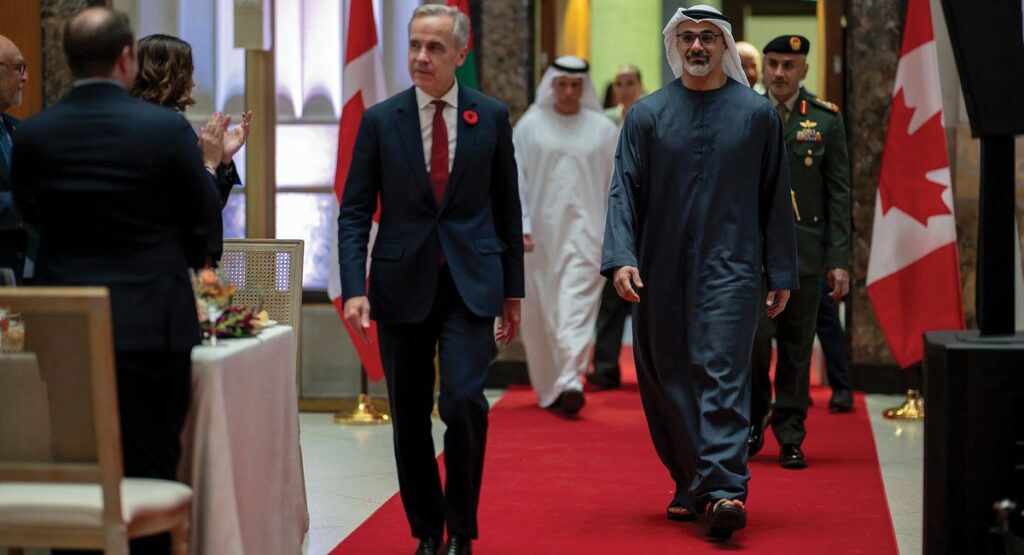
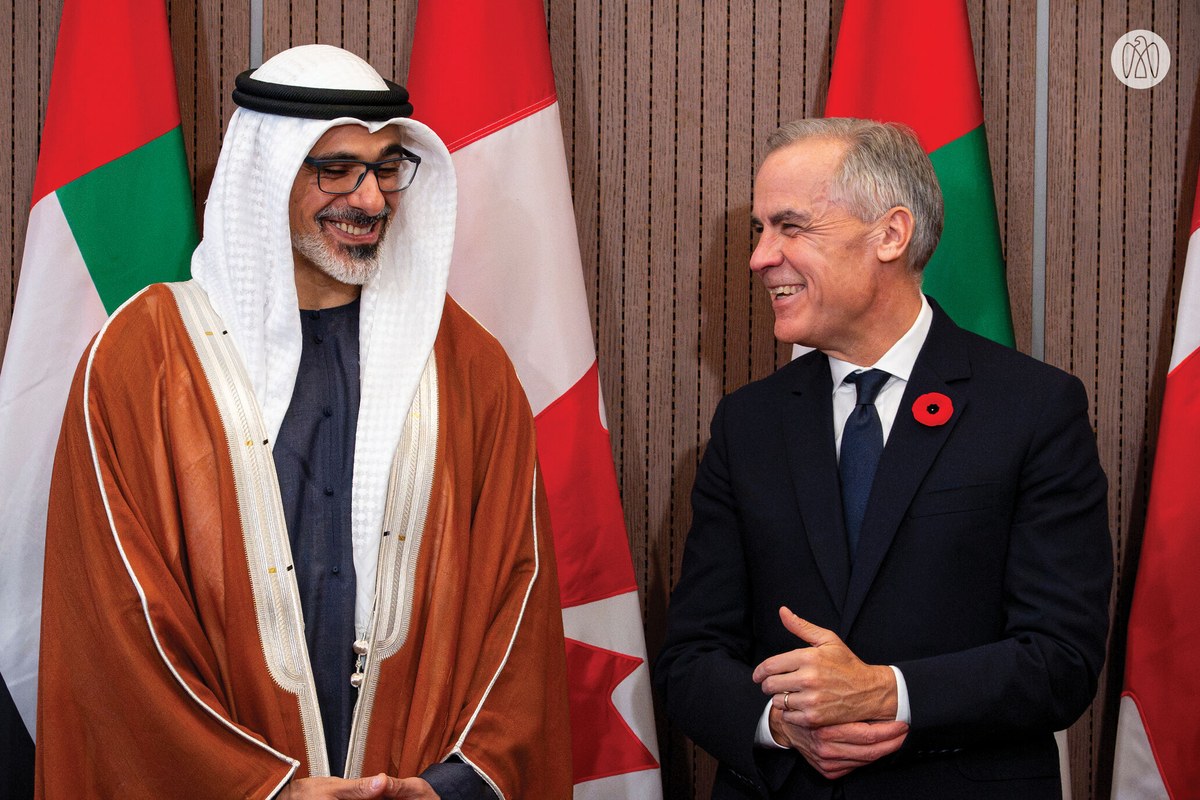
The UAE and Canada have signed a Comprehensive Economic Partnership Agreement in Ottawa, witnessed by His Highness Sheikh Khaled bin Mohamed bin Zayed Al Nahyan, Crown Prince of Abu Dhabi, and Mark Carney, Prime Minister of Canada. Dr Thani bin Ahmed Al Zeyoudi, the UAE’s Minister of Foreign Trade, and Maninder Sidhu, Canada’s Minister of International Trade, signed the deal during the Crown Prince’s first official visit to Canada.
Negotiations concluded in a record 47 days, the fastest either country has ever negotiated a free trade agreement. The agreement is expected to enter into force in 2027, following ratification procedures.
Once fully implemented, the agreement will reduce or eliminate tariffs on more than 99% of current Canadian exports to the UAE. It opens new markets for farmers growing pulses and canola, manufacturers of industrial machinery and power generation equipment, and the aerospace sector.
The agreement also addresses non-tariff barriers and expands market access for goods and services across industrial, agricultural, forestry, fish and seafood, environmental, and engineering sectors. It streamlines customs procedures, facilitates trade in services, and aims to improve the investment environment.
Maninder Sidhu, Canada’s Minister of International Trade, said the agreement will double two-way trade from CA$3.4 billion to CA$7 billion over the next decade. Separately, bilateral non-oil trade reached C$5.9 billion in 2025, up 21% on 2024, WAM reported.
Canadian businesses across energy, aerospace, critical minerals, agri-food and more will have greater access to the UAE’s $700 billion economy, a gateway to the wider Middle East and North African market of nearly 500 million people and over $7.2 trillion in GDP.
Maninder Sidhu, Canada’s Minister of International Trade, said in the Canadian government’s announcement.
Dr Thani Al Zeyoudi said the agreement creates opportunities through improved market access and investment in logistics, communications, advanced technology, and manufacturing. Canada is the UAE’s third-largest trading partner in the Americas, while the UAE is Canada’s largest Arab trading partner.
The signing was part of a wider Strategic Partnership between the two countries. The two sides also signed a memorandum on defence cooperation, modernising their existing arrangement, and a memorandum on diplomatic training between Global Affairs Canada and the Anwar Gargash Diplomatic Academy.
They also agreed to begin negotiations toward an extradition treaty and a mutual legal assistance treaty. The visit also advanced the UAE’s $70 billion investment commitment to Canada, announced during Carney’s visit to Abu Dhabi in November 2025.
In less than a year, we have put an investment protection agreement in force, negotiated and signed a trade agreement in record time, and turned a historic $70 billion commitment into real investments in Canadian energy, infrastructure, and technology.
Mark Carney, Prime Minister of Canada, said in the Canadian government’s announcement.
The visit delivered commercial agreements including a DP World memorandum on an integrated transportation corridor linking the Port of Churchill, the Hudson Bay Railway, and CentrePort Canada. Masdar and Natural Resources Canada signed an energy cooperation arrangement, and Invest in Canada signed an agreement with the Abu Dhabi Chamber of Commerce and Industry.
Sidhu said the UAE’s investments in Canada would create 100,000 jobs across various sectors. More than 150 Canadian companies already operate in the UAE, and an estimated 60,000 Canadians live and work in the country.
Why this deal matters
The 47-day timeline is the real signal. Trade deals usually take years, so concluding one in seven weeks shows how hard both governments wanted this done.
Carney has pledged to double Canada’s non-US trade over the next decade as US tariffs weigh on its economy. The UAE deal is the latest step in that diversification, and it gives Ottawa a partner that is itself a gateway to the wider region.
For Gulf readers, the food angle matters as much as the headline figure. Canada is a major exporter of pulses and canola, and tariff-free access strengthens Gulf food supply chains, while the UAE gains a preferential route into Canadian energy, critical minerals, and aerospace.
The deal is also broader than tariffs. Pairing the CEPA with a $70 billion investment framework, defence cooperation, and diplomatic training turns a trade pact into a full strategic partnership, which is why both sides describe it as a new phase rather than a single agreement.
What to watch is the timetable. The deal needs ratification before it enters into force in 2027, tariff cuts phase in rather than arriving at once, and the doubling target runs over a decade, so the payoff builds gradually rather than landing on day one.
Canada joins a CEPA network the UAE has built since September 2021, a programme aimed at lifting the UAE’s non-oil foreign trade to Dh4 trillion by 2031. For the UAE, Canada adds a G7 economy to that network, and for Canada, the UAE adds a gateway to a Middle East and North Africa market of nearly 500 million people.

Leave a Reply